
📑 Table of Contents ▶
- Spicy Korean Fried Chicken Fundamentals
- Fundamentals
- Preparation/setup
- Directions
- Perfecting Spicy Korean Fried Chicken Technique
- Technique
- Tips/tricks
- Troubleshooting Spicy Korean Fried Chicken
- Perfecting results
- Troubleshooting/variations
- Serving and Storing Spicy Korean Fried Chicken
- Serving/presentation
- Pairings/storage
- Conclusion
Spicy Korean Fried Chicken
It’s a rainy afternoon and the aroma of spicy Korean fried chicken wafts through the kitchen, triggering a memory of family gatherings filled with laughter, good food, and vibrant conversations. I vividly recall the first time I tasted this dish at a bustling Korean restaurant. The crispy texture, spicy sauce, and juicy chicken created an unforgettable experience.
Recreating that moment at home lights up my culinary passion. Spicy Korean fried chicken not only satisfies cravings but also brings warmth to gatherings, encouraging everyone to dig in and enjoy. The balance of heat from gochujang and the crunch of the chicken creates a delightful contrast that keeps you coming back for more.
Crafting the perfect batch requires the right approach and a keen understanding of the ingredients. This recipe features marinated chicken pieces coated in a delightful mix and fried to perfection. You’ll soon find that spicy Korean fried chicken will be a staple at your dinner table.
Now, let’s jump into the magical world of spicy Korean fried chicken, where every step transforms ordinary ingredients into something spectacular.
Spicy Korean Fried Chicken Fundamentals
Fundamentals
Understanding the basics of spicy Korean fried chicken sets the stage for a successful dish. The core elements revolve around marinating the chicken, achieving the right coating, and frying techniques. Each step contributes to the dish’s flavor and overall texture.
Using chicken breasts or thighs, the preferred choice depends on personal preference; you can always go for the meat that you enjoy the most. Gochujang, the star ingredient, infuses everything with a spicy kick. This fermented chili paste adds depth and character, ensuring each bite bursts with flavor.
Preparation/setup
Before diving into cooking, gather all the ingredients for an efficient workflow. Preparing the marinade allows the chicken to soak up the flavors, while setting up the frying station helps streamline the cooking process.
You will need to create a dedicated space with oil for frying and a plate lined with paper towels to drain the excess oil from the fried chicken. No one likes greasy fingers, so proper preparation will make your cooking adventure much more enjoyable.
Ingredients
To create the spiciest Korean fried chicken, ensure you have the following ingredients on hand:
For the Chicken:
- 4 chicken breasts or thighs, cut into small pieces
- 2 tablespoons gochujang
- 2 tablespoons soy sauce
- 1 tablespoon lemon juice
- 1/2 tablespoon minced garlic
- 1/2 tablespoon minced ginger
- 2 teaspoons chili flakes
- 1 teaspoon salt
- 1 teaspoon white pepper
For the Coating:
- 250g plain flour
- 250g corn flour
- 2 teaspoons salt
- 2 teaspoons garlic powder
- 1 teaspoon white pepper
- 80ml water
- 2 eggs
- 120ml water
For the Sauce:
- 5 tablespoons gochujang
- 2 teaspoons brown sugar
- 2 teaspoons chili flakes
- 2 green chillies, chopped (Thai chili peppers work great)
- Sesame seeds, to sprinkle on top
- 1 spring onion, also to sprinkle on top
Directions
-
In a mixing bowl, combine the chicken pieces with gochujang, soy sauce, lemon juice, minced garlic, minced ginger, chili flakes, salt, and white pepper. Let the mixture marinate for at least 30 minutes.
-
In a separate bowl, mix the plain flour, corn flour, salt, garlic powder, and white pepper. In another bowl, whisk the eggs and add both quantities of water, mixing well.
-
Heat oil in a frying pan or deep fryer to 350°F (175°C).
-
Take the marinated chicken and coat each piece first in the egg mixture, followed by the flour mixture.
-
Once the oil is heated, gently place the chicken pieces in the hot oil. Fry until golden brown, approximately 7-10 minutes, ensuring the chicken is fully cooked.
-
Transfer the fried chicken to a plate lined with paper towels to drain any excess oil.
-
For the sauce, mix gochujang, brown sugar, chili flakes, and chopped green chilies in a bowl.
-
Toss the fried chicken in the sauce until well coated.
-
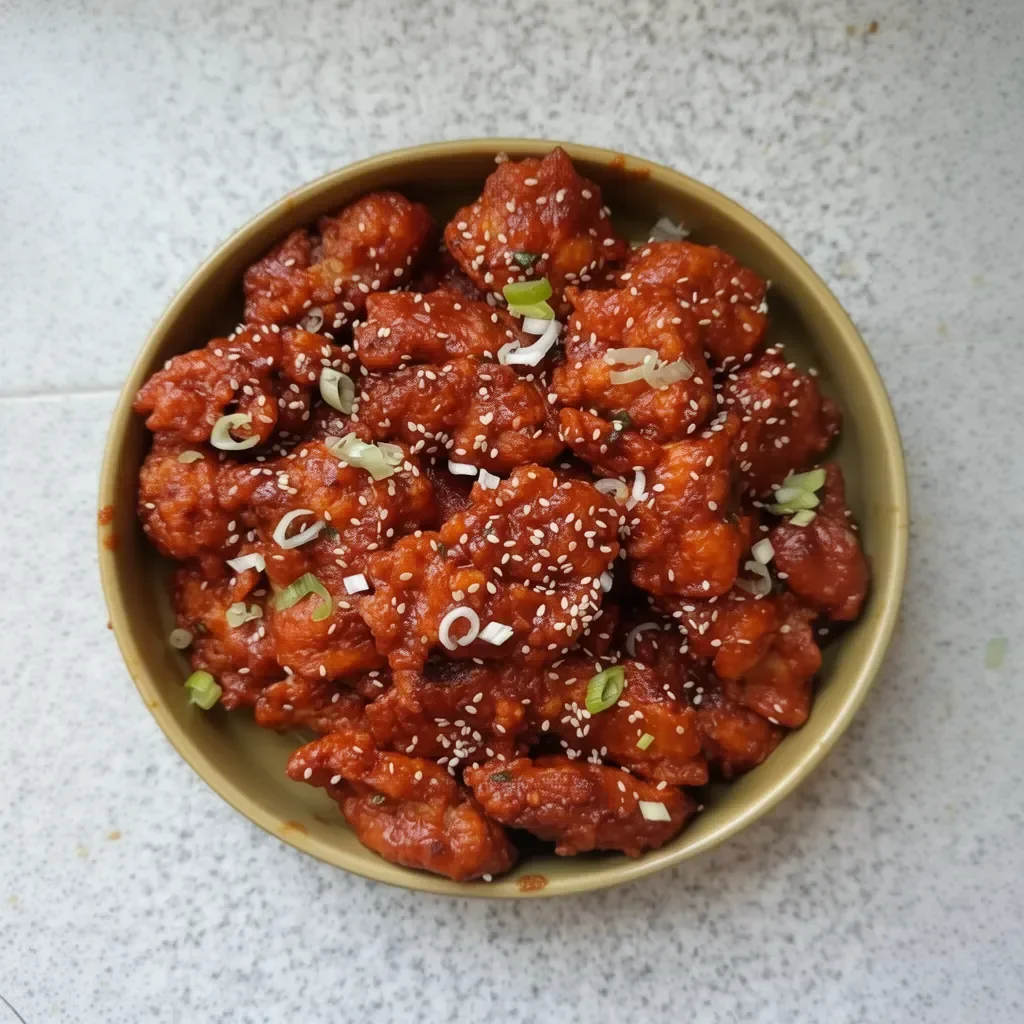
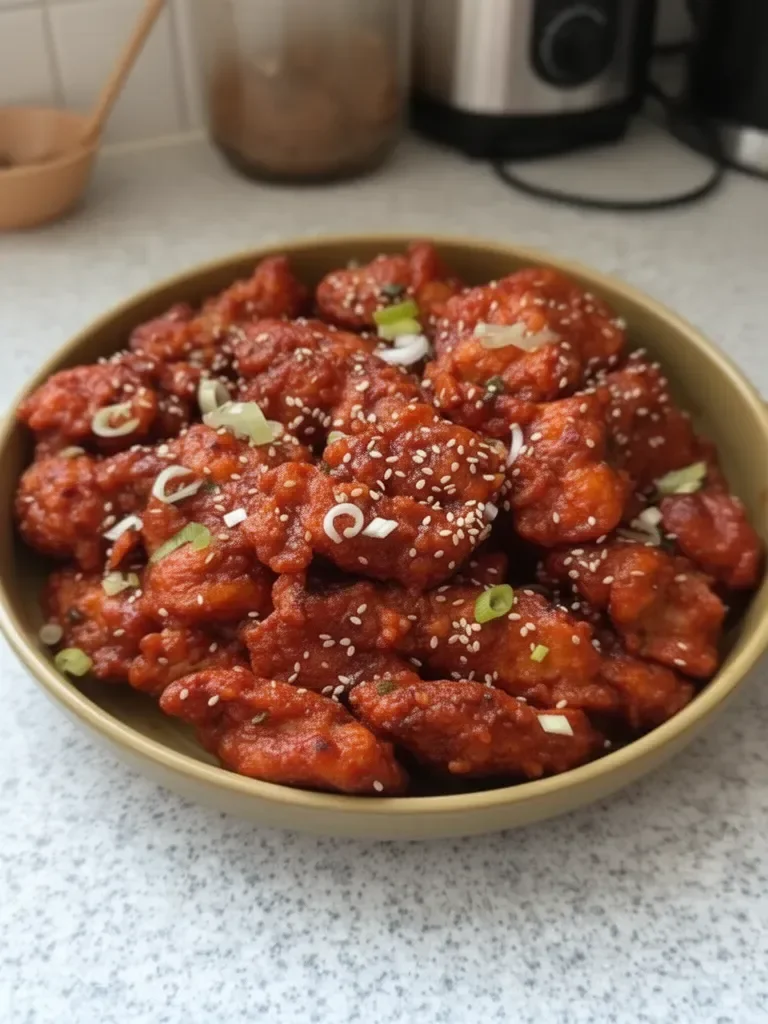
Serve the spicy Korean fried chicken garnished with sesame seeds and chopped spring onions.
Perfecting Spicy Korean Fried Chicken Technique
Technique
Perfecting the frying technique is key to achieving delicious crispy Korean fried chicken. The oil temperature must be consistent to ensure even cooking without overcooking the exterior. Using a thermometer can help monitor the oil temperature, allowing you to maintain 350°F throughout the frying process.
Another crucial aspect involves the marination time. The longer you allow the chicken to marinate, the more flavor it absorbs, resulting in a robust taste. Ideally, let the chicken sit for two hours or overnight in the refrigerator for maximum effect.
Tips/tricks
Timing and technique play a huge role in achieving the ideal crispy texture. Fry the chicken in small batches to avoid lowering the oil temperature too much. This ensures that the chicken cooks evenly and remains crunchy on the outside.
For an added flavor boost, consider double frying the chicken. First, fry for about 5-6 minutes, let them rest for a few minutes, then fry them again for an additional 3-4 minutes. This method enhances the crispiness and takes your spicy Korean fried chicken to the next level.
Troubleshooting Spicy Korean Fried Chicken
Perfecting results
Achieving the perfect spicy Korean fried chicken can present challenges, but troubleshooting can guide you through. If the chicken doesn’t develop a crispy exterior, it may be due to excess moisture. Ensure that you thoroughly dry the chicken after marinating and remain vigilant about the frying temperature.
On the other hand, if the chicken overcooks or burns, your oil temperature may be too high. Keeping close tabs on the heat during frying ensures golden brown results without compromising the interior.
Troubleshooting/variations
If you want to mix things up, consider using different spice levels. Adjust the amount of gochujang, add more chili flakes, or substitute Thai chilis for a different heat profile. You could also explore different marinades, incorporating other ingredients like sesame oil or rice vinegar for a unique twist.
For variations in coating, try adding breadcrumbs or a blend of flours to elevate texture. Each small change can lead to exciting new flavors while keeping the core deliciousness intact.
Serving and Storing Spicy Korean Fried Chicken
Serving/presentation
When it comes to serving your spicy Korean fried chicken, presentation enhances the experience. Arrange the crispy chicken on a platter and generously drizzle it with the spicy sauce. Sprinkling sesame seeds and chopped spring onions adds a pop of color and a touch of elegance.
Pair the chicken with sides like steamed rice, kimchi, or pickled vegetables for a complete Korean meal. The balance of spicy, savory, and tangy flavors makes it even more enticing.
Pairings/storage
Though this spicy Korean fried chicken shines as a standalone dish, it’s versatile enough to pair with refreshing side dishes. Consider cucumber salad, pickled radishes, or a light coleslaw. These sides cut through the spice and heavy textures, elevating the overall meal.
For storing leftovers, place the chicken in an airtight container in the refrigerator. Enjoy the leftovers within 2-3 days for the best taste. Reheating in an oven or air fryer helps maintain its crispy texture, making it just as delightful the second day.
Conclusion
Savoring spicy Korean fried chicken can transport you right back to a lively dining experience. With the right techniques, flavors, and a bit of enthusiasm, you can create a dish that truly embodies the spirit of Korean cuisine. The tantalizing combination of flavors and textures will keep everyone coming back, making your kitchen the heart of joyful gatherings around the table. Embrace the adventure and let your culinary journey begin.
Print
Spicy Korean Fried Chicken
- Prep Time: 30 minutes
- Cook Time: 30 minutes
- Total Time: 60 minutes
- Yield: 4 servings
- Category: Main Course
- Method: Frying
- Cuisine: Korean
- Diet: None
Description
A crispy, spicy chicken dish marinated in gochujang that brings warmth and flavor to any gathering.
Ingredients
- 4 chicken breasts or thighs, cut into small pieces
- 2 tablespoons gochujang
- 2 tablespoons soy sauce
- 1 tablespoon lemon juice
- 1/2 tablespoon minced garlic
- 1/2 tablespoon minced ginger
- 2 teaspoons chili flakes
- 1 teaspoon salt
- 1 teaspoon white pepper
- 250g plain flour
- 250g corn flour
- 2 teaspoons salt
- 2 teaspoons garlic powder
- 1 teaspoon white pepper
- 80ml water
- 2 eggs
- 120ml water
- 5 tablespoons gochujang (for sauce)
- 2 teaspoons brown sugar
- 2 teaspoons chili flakes (for sauce)
- 2 green chillies, chopped
- Sesame seeds, to sprinkle on top
- 1 spring onion, also to sprinkle on top
Instructions
- Combine the chicken pieces with gochujang, soy sauce, lemon juice, minced garlic, minced ginger, chili flakes, salt, and white pepper in a mixing bowl. Let marinate for at least 30 minutes.
- Mix the plain flour, corn flour, salt, garlic powder, and white pepper in a separate bowl. In another bowl, whisk the eggs and add both quantities of water, mixing well.
- Heat oil in a frying pan or deep fryer to 350°F (175°C).
- Coat each marinated chicken piece first in the egg mixture, followed by the flour mixture.
- Fry the coated chicken in hot oil until golden brown, approximately 7-10 minutes, ensuring it is fully cooked.
- Drain the fried chicken on a plate lined with paper towels to remove excess oil.
- Mix together gochujang, brown sugar, chili flakes, and chopped green chilies in a bowl for the sauce.
- Toss the fried chicken in the sauce until well coated.
- Serve garnished with sesame seeds and chopped spring onions.
Notes
For extra crispiness, consider double frying the chicken and use a thermometer to monitor oil temperature.
