
📑 Table of Contents ▶
Korean Marinated Eggs
Exploring the cuisine of Korea opens up a world of vibrant flavors and unique traditions. Among the many delightful dishes, Korean marinated eggs stand out as a simple yet exquisite treat. I remember the first time I tried these flavorful eggs at a small Korean diner. The combination of savory soy sauce, crunchy garlic, and aromatic sesame oil created a symphony of taste that danced on my palate.
I quickly learned that marinated eggs are not just about flavor; they embody a culinary philosophy of balance and harmony. As I set out to recreate this dish, I discovered how easy and rewarding the process could be. The rich umami from soy sauce combined with the delicate texture of perfectly cooked eggs makes for an irresistible experience.
Sharing these Korean marinated eggs with family and friends offers an opportunity to connect over something truly special. Whether served over rice or enjoyed on their own, these eggs are a testament to the magic of Korean cuisine. Let’s delve into the world of Korean marinated eggs and unlock the secrets to creating this mouthwatering dish together.
Korean Marinated Eggs: Fundamentals
Fundamentals
Korean marinated eggs carry a rich history intertwined with various regional flavors. The method of preserving eggs in savory sauces parallels other cuisines’ approaches to marinated ingredients. The allure of this dish lies in its simplicity, allowing the eggs to absorb the marinade’s flavors while retaining their delicate egginess.
Preparation starts with choosing high-quality eggs. Large eggs work wonderfully, ensuring a satisfying bite and ample surface area for the marinade. The combination of soy sauce, sesame oil, and other ingredients creates a unique experience that transports you directly to a bustling Korean market.
Preparation/setup
Begin with an ice bath ready to receive the perfectly boiled eggs. Fill a large bowl with ice and water; this step is essential for stopping the cooking process. Next, bring a pot of water to a gentle boil, ensuring the temperature is just right to achieve optimal cooking results. This preparation allows you to focus on the marinade while the eggs cook, ensuring everything is timed perfectly.
Ingredients
Gathering fresh ingredients contributes significantly to the overall taste of the dish. For this recipe, you will need the following:
- 6 to 8 large eggs
- 1/2 cup soy sauce
- 1/2 cup water
- 1 tablespoon sesame oil
- 1 tablespoon brown sugar
- 4 cloves garlic, minced
- 2 green onions, finely chopped
- 1 to 2 chili peppers, thinly sliced
- 1 tablespoon toasted sesame seeds
Directions
- Prepare an ice bath and bring a pot of water to a gentle boil.
- In a mixing bowl, combine soy sauce, water, sesame oil, brown sugar, garlic, green onions, chili peppers, and sesame seeds. Stir well to blend the flavors.
- Gently lower room temperature eggs into boiling water and cook for 6 to 6.5 minutes. This timing ensures a soft-boiled texture, ideal for marination.
- Transfer the cooked eggs immediately to the ice bath. This shock stops the cooking process and makes peeling easier.
- Once cooled, peel the eggs carefully under running water to remove stubborn shells.
- Place the peeled eggs into a container and pour the marinade over them, ensuring they’re fully submerged.
- Cover and refrigerate for at least 6 hours, or preferably overnight. Flip the eggs halfway through to ensure even marination.
- Slice the marinated eggs and serve them over rice, noodles, or enjoy them on their own. Spoon additional marinade over the eggs for an explosion of flavor.

Elevate Your Marinated Eggs
Technique
Mastering the cooking technique of the eggs is vital for achieving that perfect texture. Timing is crucial—if boiled too long, the eggs may become hard instead of soft. The gentle boil ensures even cooking, while placing the eggs in ice water retains that beautiful creamy yolk.
The marinade itself offers versatility. Feel free to adjust the ingredients based on your taste preferences. For a bolder flavor, increase the amount of garlic or choose spicier chili peppers. Each adjustment allows you to personalize your marinated eggs.
Tips/tricks
Use room temperature eggs for a more uniform cook. Cold eggs can lead to cracks when placed directly into boiling water. Consider preparing extra marinade if you enjoy a more intense flavor. Store it in the refrigerator for several days, using it to brighten up other dishes.
Experimenting with ingredient ratios is part of the fun. Discovering your signature balance of soy sauce, sesame oil, and garlic can enhance the experience, making it uniquely yours.
Perfect Your Marinated Eggs
Perfecting results
Achieving perfection with marinated eggs might require a little practice. The first step is ensuring you don’t overcook the eggs. Remember that a shorter boiling time leads to that delightful, creamy center. Once you master timing, focus on letting the eggs marinate long enough to absorb the full flavor of the marinade.
The chilling time helps develop flavors further. Ideally, letting the eggs sit overnight gives you the maximum flavor profile while maintaining the egg’s delicate texture.
Troubleshooting/variations
If you find that your eggs didn’t soak up enough flavor, consider increasing the marination time. For a more intense taste, you can also add a splash of rice vinegar or a sprinkle of chili flakes to the marinade.
If peeling your eggs becomes a challenge, try rolling them gently on the counter to create small cracks before submerging them in water. This technique can ease the peeling process and give you those smooth, beautiful eggs.
Experience Korean Marinated Eggs
Serving/presentation
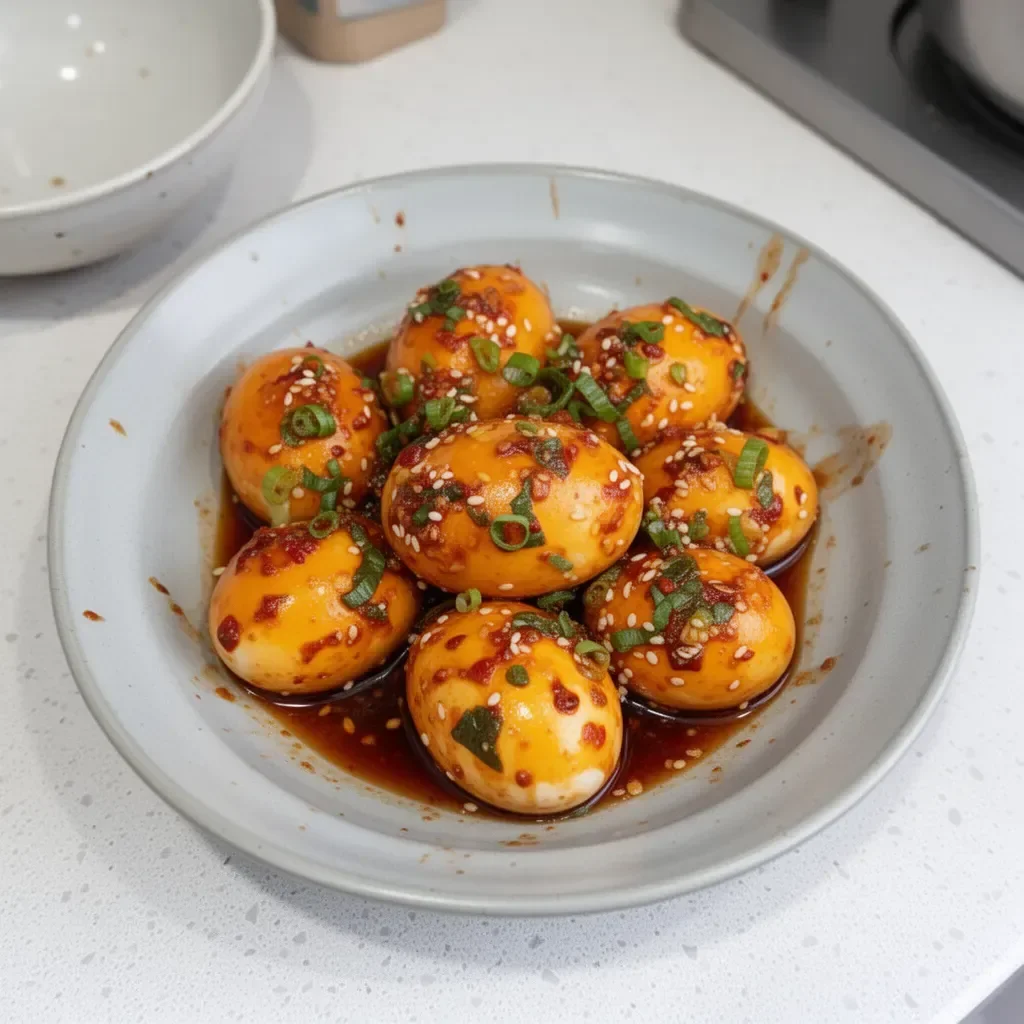
Presenting your marinated eggs elevates the overall dining experience. A simple yet elegant arrangement on a plate makes them visually appealing. Consider garnishing with additional chopped green onions or extra sesame seeds to enhance the presentation.
Serving the eggs alongside a bowl of steamed rice or a refreshing salad creates a delightful contrast. Their striking appearance will surely impress your guests at any gathering.
Pairings/storage
For a perfect pairing, enjoy your marinated eggs with steamed vegetables or a light soup. The balance complements the saltiness and richness of the eggs, creating a harmonious meal. Refrigerate any leftover marinated eggs in their brine and consume them within a week to retain freshness.
When stored correctly, marinated eggs maintain their delectable flavors while becoming even more flavorful over time. Do not hesitate to include them in various dishes such as salads or snacks—there are countless ways to enjoy this Korean delicacy.
Marinated eggs are a simple yet impressive dish that can brighten up any meal. They provide a window into the flavors of Korean cuisine, embodying simplicity and the power of marination.
Embrace the journey of creating Korean marinated eggs. With practice, you’ll find your rhythm, and soon this delightful recipe will become a consistent dish in your culinary repertoire. Let your exploration of Korean flavors begin now.
Print
Korean Marinated Eggs
- Prep Time: 15 minutes
- Cook Time: 10 minutes
- Total Time: 25 minutes
- Yield: 4 servings
- Category: Appetizer
- Method: Boiling / Marinating
- Cuisine: Korean
- Diet: Vegetarian
Description
Korean marinated eggs feature perfectly cooked eggs soaked in a savory soy sauce marinade, enhanced with garlic and sesame oil, offering a delicious and unique treat.
Ingredients
- 6 to 8 large eggs
- 1/2 cup soy sauce
- 1/2 cup water
- 1 tablespoon sesame oil
- 1 tablespoon brown sugar
- 4 cloves garlic, minced
- 2 green onions, finely chopped
- 1 to 2 chili peppers, thinly sliced
- 1 tablespoon toasted sesame seeds
Instructions
- Prepare an ice bath and bring a pot of water to a gentle boil.
- Combine soy sauce, water, sesame oil, brown sugar, garlic, green onions, chili peppers, and sesame seeds in a mixing bowl. Stir well to blend the flavors.
- Lower room temperature eggs into boiling water and cook for 6 to 6.5 minutes for a soft-boiled texture.
- Transfer the cooked eggs immediately to the ice bath to stop the cooking process.
- Peel the eggs carefully under running water to remove stubborn shells.
- Place the peeled eggs into a container and pour the marinade over them, ensuring they’re fully submerged.
- Cover and refrigerate for at least 6 hours, or preferably overnight. Flip the eggs halfway through for even marination.
- Slice the marinated eggs and serve them over rice, noodles, or enjoy them on their own, spooning additional marinade over the eggs.
Notes
Use room temperature eggs for uniform cooking and consider preparing extra marinade for more intense flavor.
