
📑 Table of Contents ▶
Best Greek Salad Recipe
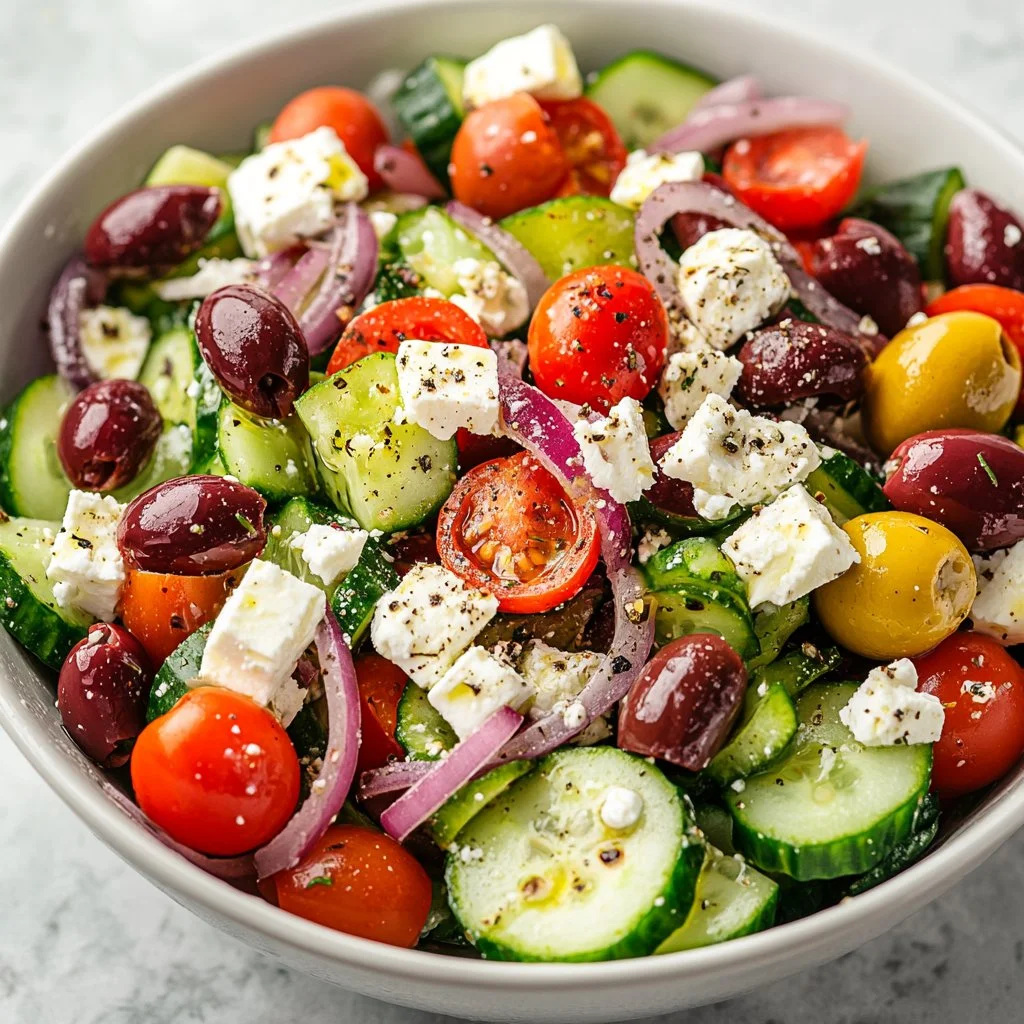
Sharing meals around the table always ignites my fondest memories. Growing up, my family often gathered for summer barbecues, where vibrant salads took center stage. The refreshing crunch of cucumbers and the burst of flavor from ripe tomatoes filled our plates. Among all the dishes, my absolute favorite was Greek salad. Its delightful mixture of vegetables, feta, and olives captured the essence of summer.
The beauty of Greek salad lies not just in its colorful presentation, but also in its simplicity. Each ingredient brings its own unique character to the dish, creating a harmonious blend that satisfies both the palate and the soul. The tangy dressing, highlighted by the lemon and vinegar, elevates the freshness of the vegetables. Each bite transports you to a sunlit terrace in Greece, where laughter and good food abound.
In this article, you will discover the best Greek salad recipe that’s easy to make and perfect for any occasion. With a handful of fresh ingredients and vibrant flavors, you’ll want to whip up this salad every chance you get. Let’s dive into the delicious world of Greek salad that brings people together!
Greek Salad Essentials
Fundamentals
Greek salad serves as a symbol of Mediterranean cuisine, emphasizing fresh, quality ingredients. Its charm lies in the ability to showcase seasonal produce. This dish shines especially during summer when tomatoes ripen to perfection and cucumbers remain crisp. The combination of crunchy vegetables and creamy feta creates an appealing texture that delights every bite.
The dressing plays a crucial role in enhancing the salad’s flavors. A classic Greek salad dressing features red apple vinegar, lemon juice, and Dijon mustard, bringing a zesty kick that brightens every mouthful. The dressing’s simplicity allows the salad ingredients to shine while tying them together harmoniously.
Preparation/setup
To make this perfect Greek salad, ensure you have all your ingredients ready. Start by washing the produce and gathering your tools. A sharp knife and a sturdy cutting board will help speed up the preparation process. Having a large mixing bowl handy for combining everything will save you time and effort.
Once your cucumbers, tomatoes, bell pepper, red onion, Kalamata olives, and feta cheese are prepped, you can transition to the dressing. Whisking the ingredients together in a separate bowl allows the flavors to meld beautifully before adding them to the salad.
Ingredients
For this delicious Greek salad, gather these fresh ingredients:
- 1 large cucumber, diced
- 1 pint grape tomatoes, halved
- 1 green bell pepper, diced
- ½ red onion, thinly sliced
- ½ cup Kalamata olives, halved
- 4 ounces feta cheese, crumbled
- ⅓ cup red apple vinegar
- Juice of 1 lemon
- 1 teaspoon Dijon mustard
- 2 garlic cloves, minced
- ½ teaspoon dried oregano
- ¼ teaspoon salt
- ¼ teaspoon black pepper
- ½ cup olive oil
- Salt and pepper to taste
These ingredients contribute to a deliciously refreshing salad bursting with flavor and nutrients.
Directions
-
In a large mixing bowl, combine diced cucumber, halved grape tomatoes, diced bell pepper, sliced red onion, Kalamata olives, and crumbled feta cheese.
-
In a separate small bowl, whisk together red apple vinegar, lemon juice, Dijon mustard, minced garlic, oregano, salt, and black pepper. Gradually add olive oil while whisking until emulsified.
-
Drizzle the dressing over the salad mixture and gently stir to combine until all ingredients are evenly coated.
Elevating Your Greek Salad
Technique
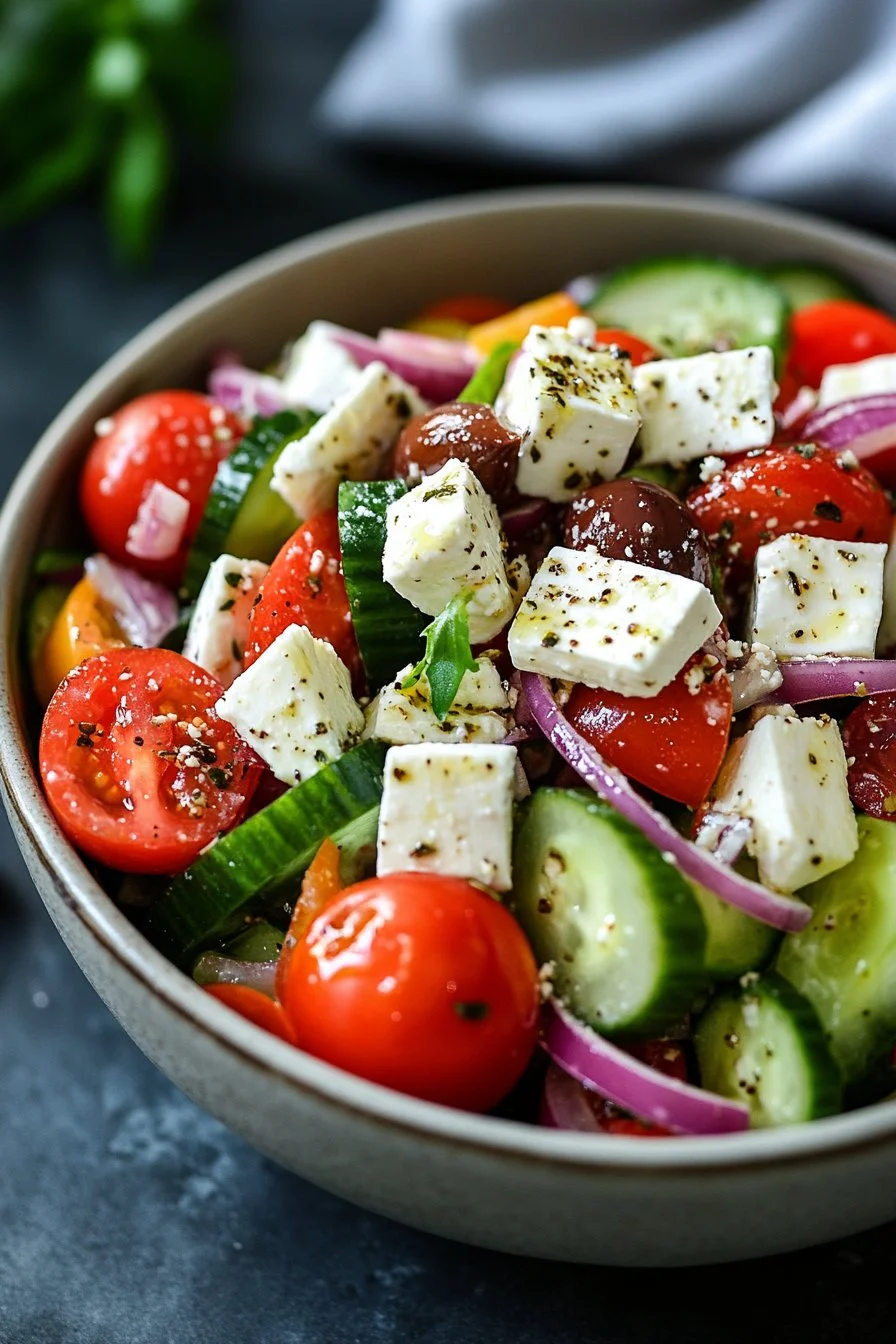
Perfecting a Greek salad doesn’t just involve tossing ingredients together; the technique matters too. Start by cutting your vegetables uniformly. Diced cucumber and bell peppers should match the tomato halves in size for a consistent texture. This attention to detail enhances both the presentation and the overall eating experience.
Additionally, crumbling the feta cheese just before serving preserves its texture and creaminess. Large chunks may become mushy when mixed, so strive for good, even crumbles. Allowing the salad to rest for a few minutes before serving lets the flavors meld together, creating a richer taste.
Tips/tricks
To ensure your Greek salad stands out:
- Opt for fresh, in-season produce for the best flavor.
- Allow the salad to chill in the refrigerator for a short period before serving, intensifying the flavors.
- Experiment with different types of olives to find your favorite combination.
Feel free to add additional herbs, such as fresh oregano or basil, for an extra burst of flavor. These adjustments can tailor the dish to suit your palate while staying true to its Greek roots.
Customizing Your Greek Salad
Perfecting results
Creating the perfect Greek salad involves experimenting with balance. If you find your dressing too tangy, a teaspoon of honey can help. The sweetness beautifully counteracts the acidity of the vinegar and lemon juice. It’s all about finding that harmonious blend of flavors.
For an even bolder taste, consider adding a pinch of chili flakes for a spicy kick. This small tweak can significantly change the flavor profile, making it exciting.
Troubleshooting/variations
If your salad turns out too salty, try adding more cucumbers or tomatoes to dilute the flavor. Alternatively, a splash of water can balance out overly salty elements.
Additionally, you can vary the ingredients based on your preferences. Add avocados for creaminess, or even chickpeas for extra protein. These changes maintain the essence of the Greek salad while catering to your individual dietary needs.
Serving the Mediterranean Delight
Serving/presentation
Present your Greek salad in a large, elegant bowl or arrange individual servings in smaller dishes. Garnishing with extra crumbles of feta or additional olives enhances the visual appeal.
Drizzling a touch of extra olive oil over the top just before serving also adds flavor and a glossy finish. Fresh herbs sprinkled on top can elevate the overall look and add aromatic qualities, enticing guests to dig in.
Pairings/storage
Greek salad pairs beautifully with various dishes, making it perfect for summer barbecues or Mediterranean-themed meals. Serve it alongside grilled chicken or seafood for a cohesive meal.
Storing leftover Greek salad? Keep it in an airtight container in the refrigerator. It’ll last for up to three days, but make sure to enjoy the fresh flavors while they last. When storing, however, keep the dressing separate until you’re ready to serve to avoid sogginess.
This Greek salad recipe brings together all the essential elements of freshness, flavor, and ease. Enjoy crafting this delightful dish, elevating your meals while keeping them simple and delectable.
Print
Best Greek Salad Recipe
- Prep Time: 15 minutes
- Cook Time: 0 minutes
- Total Time: 15 minutes
- Yield: 4 servings
- Category: Salad
- Method: Mixing
- Cuisine: Mediterranean
- Diet: Vegetarian
Description
A refreshing Greek salad featuring a vibrant mix of cucumbers, tomatoes, bell peppers, red onions, olives, and feta cheese, dressed with a tangy vinaigrette.
Ingredients
- 1 large cucumber, diced
- 1 pint grape tomatoes, halved
- 1 green bell pepper, diced
- ½ red onion, thinly sliced
- ½ cup Kalamata olives, halved
- 4 ounces feta cheese, crumbled
- ⅓ cup red apple vinegar
- Juice of 1 lemon
- 1 teaspoon Dijon mustard
- 2 garlic cloves, minced
- ½ teaspoon dried oregano
- ¼ teaspoon salt
- ¼ teaspoon black pepper
- ½ cup olive oil
- Salt and pepper to taste
Instructions
- In a large mixing bowl, combine diced cucumber, halved grape tomatoes, diced bell pepper, sliced red onion, Kalamata olives, and crumbled feta cheese.
- In a separate small bowl, whisk together red apple vinegar, lemon juice, Dijon mustard, minced garlic, oregano, salt, and black pepper. Gradually add olive oil while whisking until emulsified.
- Drizzle the dressing over the salad mixture and gently stir to combine until all ingredients are evenly coated.
Notes
Chill the salad for a short period before serving to intensify the flavors. Customize by adding fresh herbs or different types of olives.
