
📑 Table of Contents ▶
- Cornbread Stuffing Recipe
- Cornbread Stuffing Recipe Basics
- Fundamentals
- Preparation/Setup
- Mastering Cornbread Stuffing
- Technique
- Tips/Tricks
- Perfecting Your Cornbread Stuffing
- Perfecting Results
- Troubleshooting/Variations
- Serving and Storing Cornbread Stuffing
- Serving/Presentation
- Pairings/Storage
- Conclusion
- FAQs – Cornbread Stuffing Recipe
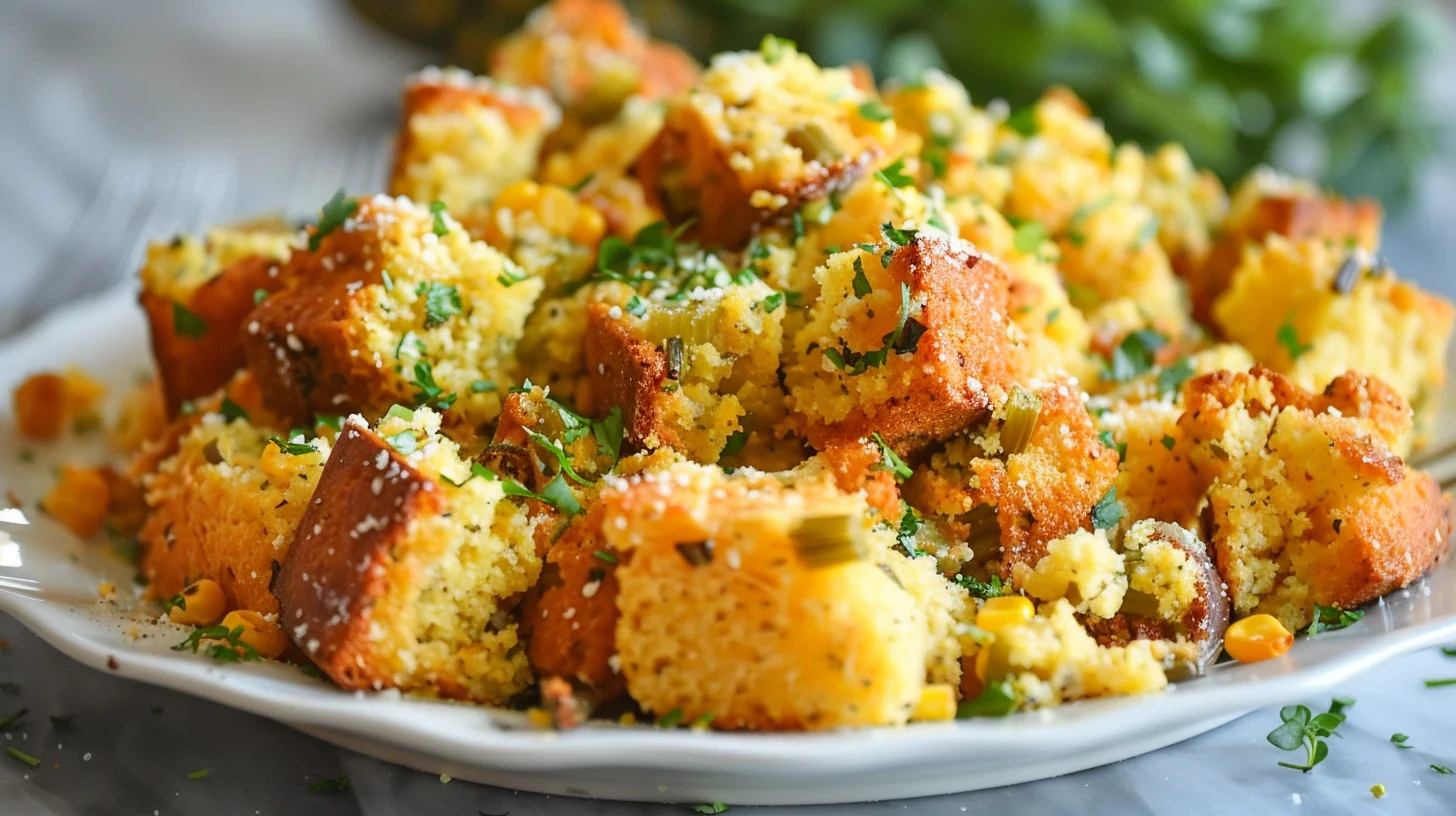
Gathering around the table with family and friends is one of my favorite moments, especially when the centerpiece is a delicious cornbread stuffing recipe. The aroma of freshly baked cornbread mingling with herbs and spices always evokes fond memories of holidays and special occasions. I’ve found that incorporating my own twist on classic recipes, like this cornbread stuffing, not only adds flavor but also creates new traditions to cherish.
When I first started experimenting with cornbread stuffing, I was surprised by how versatile it could be. Using a few simple ingredients, I realized that this dish could easily transition from a holiday staple to an everyday comfort food. The combination of savory onions, celery, and herbs with the sweet notes of honey in the cornbread creates a balance that’s hard to resist.
This cornbread stuffing recipe is a testament to how simple ingredients can transform into something truly special. Whether you’re preparing it for a festive gathering or a cozy family dinner, it’s sure to become a favorite. So, let’s dive into the process of creating this delectable dish, ensuring every bite is packed with flavor and warmth.

Cornbread Stuffing Recipe
- Prep Time: 20 minutes
- Cook Time: 40 minutes
- Total Time: 40 minutes
- Yield: 8 to 10 servings
- Category: Main Course
- Method: Baking
- Cuisine: American
Description
Discover the best cornbread stuffing recipe for your next holiday feast. Learn how to make this delicious side dish with step-by-step instructions.
Ingredients
- 1 cup yellow cornmeal (240g)
- 1/2 cup all-purpose flour or whole wheat flour (60g)
- 3/4 teaspoon (4 ml) salt
- 1 tablespoon (15 ml) baking powder
- 1/2 teaspoon (3 ml) baking soda
- 2 eggs
- 1 cup plain low-fat yogurt or buttermilk (240ml)
- 1/2 cup milk (120ml)
- 1 tablespoon (15 ml) mild honey
- 2 to 3 tablespoons (38 ml) vegetable oil
- 2 tablespoons (30 ml) vegetable oil, or 1 tablespoon (15 ml) each vegetable oil and unsalted butter
- 1 large onion, finely chopped
- Salt to taste
- 4 stalks celery, cut in small dice
- 4 garlic cloves, minced
- 2 teaspoons (10 ml) rubbed sage, or 2 tablespoons (30 ml) chopped fresh sage
- 1 tablespoon (15 ml) fresh thyme leaves or 1 1/2 teaspoons (8 ml) dried thyme
- 1/2 cup (120 ml) finely chopped flat-leaf parsley
- Freshly ground pepper
- A double batch of cornbread (see above), crumbled you can do this in a food processor fitted with the steel blade
- 1/2 cup milk, or as necessary, for moistening (120ml)
- 4 tablespoons (60 ml) unsalted butter if baking separately
Instructions
- Warm the oven to 400°F and place a 9-inch cast iron skillet, a heavy 2-quart baking dish, or a heavy 9-inch square baking pan inside to heat while you prepare the mixture.
- In a bowl, combine the cornmeal and sift the flour, salt, baking powder, and baking soda into it. Use a spoon or whisk to blend these dry ingredients together.
- In a separate bowl, whisk the eggs, yogurt (or buttermilk), milk, and honey until well combined. Gradually mix the cornmeal blend into the wet ingredients, taking care not to overmix the batter.
- Take the pan from the oven and add butter, swirling it around until it melts but doesn’t brown excessively. Quickly mix this melted butter into the batter. Use any remaining butter to grease the sides of the pan.
- Pour the batter swiftly into the hot pan and bake for 35 to 40 minutes, until it’s golden on top and a toothpick inserted in the center comes out clean. The edges will be quite browned. Let it cool in the pan or serve warm.
- In a large, heavy, nonstick skillet, heat the oil (or oil and butter) over medium heat and add the chopped onion. Stir frequently for about three minutes until it starts to soften, then add 1/2 teaspoon of salt and the diced celery. Continue cooking until the onion is tender. Add the minced garlic, stirring for 30 seconds to a minute until fragrant, then transfer everything to a large bowl.
- Mix in the remaining ingredients thoroughly. Adjust the salt to taste and add milk to achieve the desired moisture level.
- Fill the turkey cavity with the mixture, or place it in a greased or oiled 2-quart baking dish. Dot the top with butter, cover with aluminum foil, and heat in a 325°F oven for 30 minutes.
Notes
- Use low-fat yogurt instead of buttermilk for a lighter cornbread.
- Avoid overmixing the batter for a tender texture.
- Taste the onion and celery mixture before adding salt, adjusting as needed.
Cornbread Stuffing Recipe Basics
Fundamentals
The foundation of any great cornbread stuffing recipe begins with the quality of the cornbread itself. Start by preheating your oven to 400°F and place a 9-inch cast iron skillet inside to heat while you prepare the batter. Combining yellow cornmeal, all-purpose flour, salt, baking powder, and baking soda creates a perfect base.
In another bowl, mix eggs, plain low-fat yogurt, milk, and a hint of honey until smooth. Gradually incorporate the dry ingredients, taking care not to overmix. The rustic texture of this cornbread is achieved by ensuring the batter remains slightly lumpy. A hot skillet ensures a crispy, golden crust, which is key to a delightful cornbread stuffing.
Preparation/Setup
Once the cornbread is baked and cooled, crumble it into coarse pieces using a food processor. This step can be done ahead of time, allowing the cornbread to dry out slightly, which helps it absorb the savory flavors of the stuffing mixture. Prepare your vegetables by finely chopping a large onion and dicing celery into small pieces, as these will form the aromatic backbone of the stuffing.
In a large skillet, heat vegetable oil over medium heat and sauté the onions until they begin to soften. Add celery and cook until tender, then stir in minced garlic for a burst of aroma. Transfer this fragrant mixture to a large bowl and mix in rubbed sage, fresh thyme, and finely chopped flat-leaf parsley. Season with salt and freshly ground pepper to taste.
Mastering Cornbread Stuffing
Technique
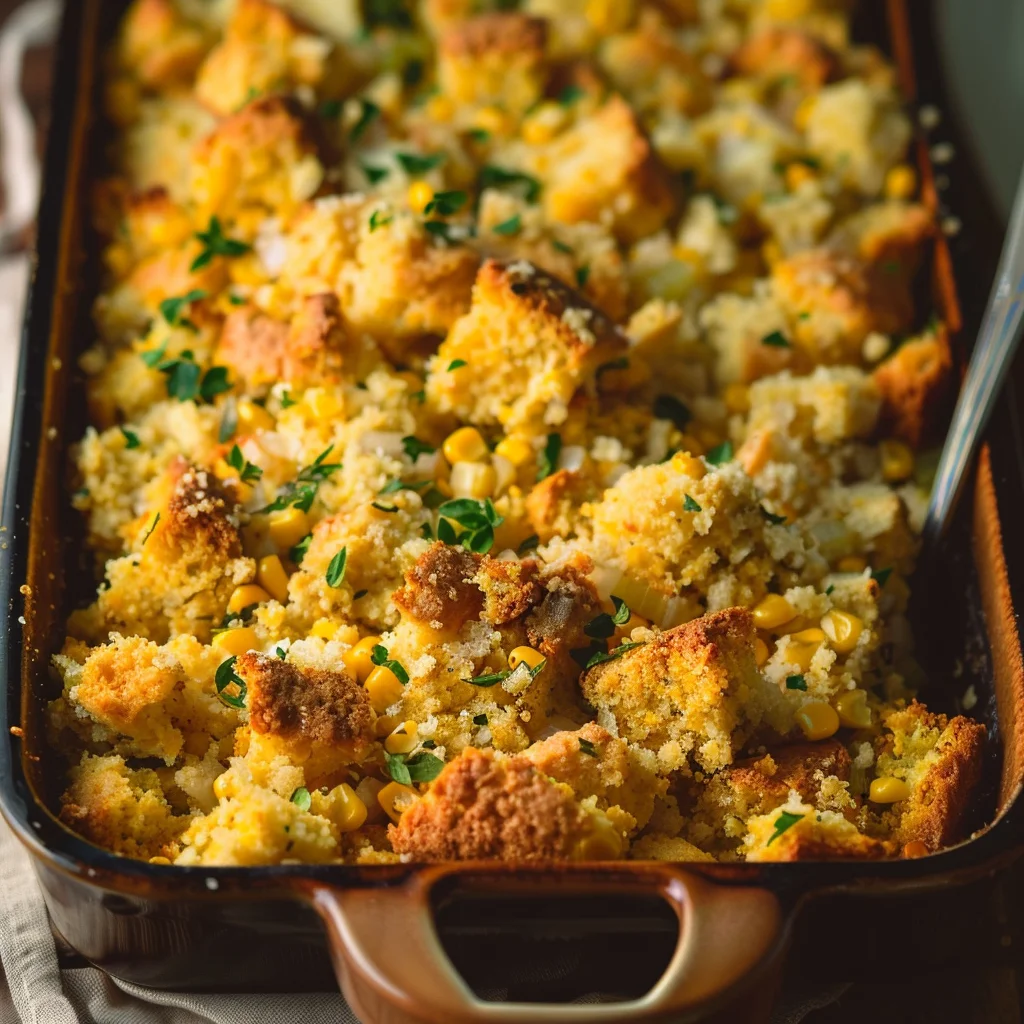
Achieving the perfect cornbread stuffing texture involves balancing moisture and flavor. Begin by combining your crumbled cornbread with the sautéed vegetable and herb mixture. Gradually add milk, stirring until the stuffing reaches your desired consistency. The cornbread should be moist but not soggy, with a cohesive texture that holds together nicely.
For an even richer flavor, fill the turkey cavity with the stuffing or bake it separately in a greased 2-quart baking dish. If baking separately, dot the top with unsalted butter before covering with aluminum foil. This method allows the flavors to meld beautifully, creating a stuffing that is both flavorful and satisfying.
Cornbread Stuffing Recipe
Tips/Tricks
One trick to elevate your cornbread stuffing is to use a combination of vegetable oil and unsalted butter when sautéing the vegetables. This adds a depth of flavor that enhances the overall dish. Additionally, allowing the cornbread to dry slightly before crumbling helps it absorb more flavors without becoming mushy.
For a twist, consider adding extras like chopped nuts or dried fruits to the stuffing mixture. These ingredients can add texture and bursts of flavor, making the dish even more delightful. Remember to taste and adjust the seasoning before baking to ensure the perfect balance of flavors.
Perfecting Your Cornbread Stuffing
Perfecting Results
To achieve perfectly cooked cornbread stuffing, bake it in a preheated 325°F oven. Cover the dish with foil to prevent the top from drying out, allowing the flavors to meld and the stuffing to heat evenly. After 30 minutes, remove the foil to let the top crisp up, adding a delightful texture contrast to the moist interior.
Observing the stuffing as it bakes ensures it reaches the desired level of doneness. The top should be golden brown, and a toothpick inserted should come out clean. This careful attention to detail ensures every serving of stuffing is a delightful blend of textures and flavors.
Troubleshooting/Variations
If your stuffing seems too dry, gently mix in a bit more milk or broth to reach the right consistency. Conversely, if it’s too moist, allow it to bake a bit longer uncovered to evaporate excess moisture. Experimenting with different herbs or spices can also introduce new flavor dimensions to your stuffing, keeping the dish fresh and exciting.
For those who prefer a spicier kick, consider adding a pinch of cayenne pepper or red pepper flakes to the mixture. This subtle heat can enhance the stuffing without overpowering its savory notes. No matter the variation, maintaining the balance of flavors is key to a successful dish.
Serving and Storing Cornbread Stuffing
Serving/Presentation
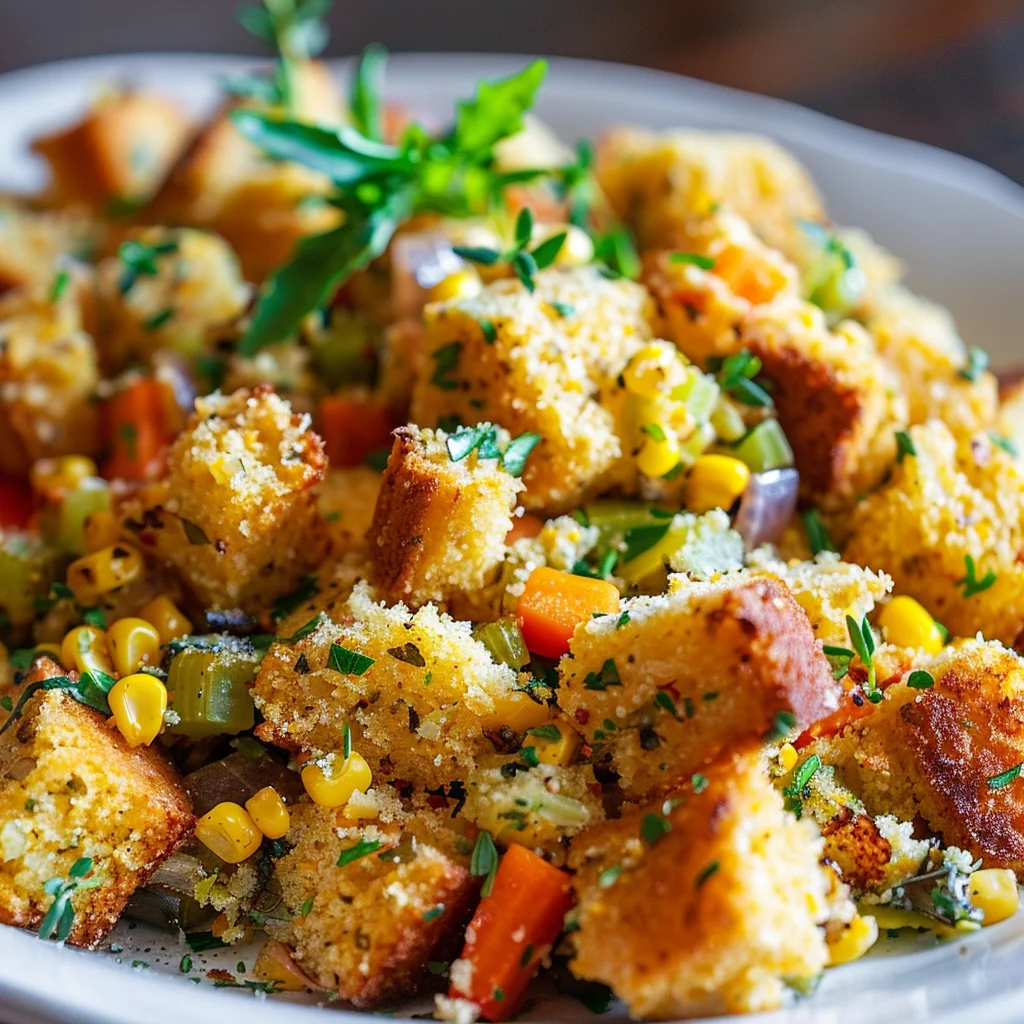
Presenting your cornbread stuffing beautifully can elevate the dining experience. Serve it in the same dish it was baked in, or transfer it to a decorative serving bowl. Garnish with fresh parsley or thyme for a pop of color and a touch of freshness.
This stuffing pairs wonderfully with a variety of main dishes. Try it alongside a Baked Honey Dijon Chicken Recipe or a One Skillet Chicken with Garlicky Mushroom Cream Sauce Recipe for a complete meal. The savory and sweet elements of the stuffing beautifully complement the flavors of these chicken dishes.
Pairings/Storage
For optimal freshness, store any leftover stuffing in an airtight container in the refrigerator for up to three days. Reheat in the oven to maintain its texture, adding a splash of broth if necessary to restore moisture. This stuffing also freezes well; simply wrap it tightly and store it for up to one month.
Cornbread Stuffing Recipe
Consider pairing this stuffing with a light salad or roasted vegetables for a balanced meal. Its versatility makes it a fantastic addition to any meal plan, whether for a weekday dinner or a special occasion. With its rich flavors and comforting texture, this cornbread stuffing is sure to become a staple in your recipe collection.
Conclusion
Creating a delectable cornbread stuffing recipe involves simple ingredients and a few key techniques. By focusing on quality cornbread and the right balance of moisture and flavor, you can craft a dish that’s both comforting and flavorful. Whether served alongside a Simple Oven Baked Honey Mustard Chicken Delight Recipe or as a standalone centerpiece, this stuffing brings people together with its inviting taste and aroma.
The strength of this recipe lies in its versatility and ease, making it suitable for any occasion. From holiday feasts to weeknight dinners, cornbread stuffing adds a touch of warmth and tradition to your table. Embrace the opportunity to experiment with flavors and make this dish your own, ensuring it becomes a cherished part of your culinary repertoire.
By following these guidelines, you can consistently achieve delicious results, delighting your family and guests with every serving. Enjoy the process and the delicious rewards of mastering this timeless recipe.
