
📑 Table of Contents ▶
Sticky Korean Gochujang Chicken
Cooking has always been a bonding experience in my household. As a child, I remember the smell of marinated meats and vibrant sauces wafting from the kitchen. One dish that took center stage was Gochujang chicken, a flavorful recipe that brings a delightful kick and sticky sweetness to the table. This dish captured my heart and palate, creating cherished family memories around dinnertime.
The vibrant red hue of gochujang, a Korean chili paste, has an allure that’s hard to resist. It transforms ordinary chicken into a sensational meal. The combination of heat, sweetness, and umami creates layers of flavor that leave everyone craving more. Paired with fluffy white steamed rice, this dish serves as a comforting reminder of the pleasure that comes from sharing good food with loved ones.
I continue to make this sticky Korean Gochujang chicken for family gatherings and casual weeknight dinners alike. Each bite is filled with nostalgia, and preparing it has become a cherished routine. The recipe is simple yet delivers incredible results, making it the perfect option for those looking to bring some excitement to their dinner table.
Sticky Korean Gochujang Chicken
Fundamentals
Understanding the fundamentals of sticky Korean Gochujang chicken elevates your cooking experience. This dish relies on the harmony between the savory, sweet, and spicy elements of its ingredients. The chicken thighs, with their tender and juicy nature, absorb the flavors beautifully, providing a satisfying texture.
Gochujang, the star of this recipe, is a fermented chili paste that adds depth and character to the dish. Its heat is balanced by sweeteners like honey or brown sugar, allowing the flavors to meld perfectly. The incorporation of garlic and ginger infuses the chicken with aromatic notes, creating an irresistible fragrance while cooking.
Cooking methods matter as well. A crispy exterior from the cornstarch coating enhances the dish’s overall appeal. The combination of high heat and a touch of oil ensures that the chicken gets that desirable crunch without losing moisture.
Preparation/setup
Start by gathering all your ingredients and equipment. You’ll need a large skillet or wok and a mixing bowl. Begin by cutting the boneless skinless chicken thighs into 1-inch bite-sized pieces, ensuring uniform cooking.
Next, coat the chicken with cornstarch, salt, and pepper in a mixing bowl. The cornstarch not only creates that crispy texture but also helps hold the sauce when it’s added later. Heat the neutral oil in your skillet over medium-high heat. This is the moment when the magic begins to happen.
Prepare your gochujang sauce while the chicken cooks. In a separate bowl, mix together gochujang, soy sauce, honey or brown sugar, rice vinegar, minced garlic, grated ginger, toasted sesame oil, and water. This mixture serves as a dynamic sauce that coats the chicken, creating the sticky goodness that everyone appreciates.
Ingredients
- 1.5 lbs boneless skinless chicken thighs (Cut into 1-inch bite-sized pieces)
- 3 tbsp cornstarch (For a crispy exterior)
- 1 tbsp neutral oil (Canola or avocado)
- 1/2 tsp kosher salt (To taste)
- 1/4 tsp black pepper (To taste)
- 3 tbsp gochujang (Korean chili paste)
- 2 tbsp soy sauce (Regular or low sodium)
- 2 tbsp honey or brown sugar (For sticky sweetness)
- 1 tbsp rice vinegar (For acidity)
- 3 cloves garlic (Minced)
- 1 tsp fresh ginger (Grated)
- 1 tbsp toasted sesame oil (For aroma)
- 1/4 cup water (To thin the sauce before reducing)
- 2 cups fluffy white steamed rice (For serving)
- 1 tbsp toasted white sesame seeds (For garnish)
- 2 stalks green scallions (Freshly sliced)
Directions
- In a mixing bowl, combine the chicken pieces with the cornstarch, kosher salt, and black pepper. Toss until evenly coated.
- Heat the neutral oil in a large skillet over medium-high heat. Once hot, add the chicken pieces in a single layer, ensuring each piece has space to sear.
- Cook the chicken for about 5-7 minutes, turning occasionally until golden brown and cooked through. Remove from the skillet and set aside.
- In the same skillet, pour in the gochujang sauce mixture. Bring to a gentle simmer for 2-3 minutes, allowing the sauce to thicken slightly.
- Return the cooked chicken to the skillet, tossing it in the sauce until completely coated.
- Continue cooking for another 2-3 minutes, allowing the sauce to cling to each piece of chicken.
- Serve the sticky Korean gochujang chicken over steamed rice. Garnish with toasted sesame seeds and freshly sliced green scallions.
Elevating Your Gochujang Chicken Experience
Technique
To take your sticky Korean gochujang chicken to the next level, pay attention to details during cooking. Ensure the oil is sufficiently hot before adding the chicken. This step guarantees that the chicken develops a crispy exterior while remaining juicy inside.
Use a non-stick skillet or one well-seasoned to avoid sticking. This technique makes flipping the chicken easier and ensures that the crispy coating remains intact. Remember not to overcrowd the pan; working in batches prevents steaming. Each piece deserves its chance to sear.
For an elevated texture, consider marinating the chicken for an hour or overnight with gochujang and soy sauce. This extra step not only enhances the flavor but also adds a deeper color and umami richness.
Tips/tricks
- Adjust the spice level by modifying the amount of gochujang. Use less for a milder flavor or add more for extra heat.
- Pair with seasonal vegetables like bell peppers or carrots. Simply stir-fry them in the skillet after cooking the chicken for a balanced meal.
- Make it gluten-free by opting for tamari instead of soy sauce.
Perfecting Sticky Korean Gochujang Chicken
Perfecting results
Achieve perfect results by controlling the cooking time. If you overpower the chicken with heat, it can become dry. Keep an eye on its color and texture. The goal is golden brown with a tender finish.
Thicker pieces of chicken may require additional cooking time, while smaller pieces need less. Ensure even cooking by cutting pieces uniformly.
Finally, let the dish rest for a few minutes before serving. This time allows the sauce to settle and ensures the chicken maintains its tenderness.
Troubleshooting/variations
If your sauce doesn’t thicken as desired, increase the heat slightly and allow it to simmer longer. Adding more cornstarch mixed with water can help achieve that perfect consistency.
For variations, consider adding a splash of lemon or lime juice for brightness. Alternatively, heat a bit of sesame oil for a different aromatic addition.
Swap out chicken thighs for boneless chicken breasts if preferred, though they may require careful attention to prevent drying out.
Serving and Presentation
Serving/presentation
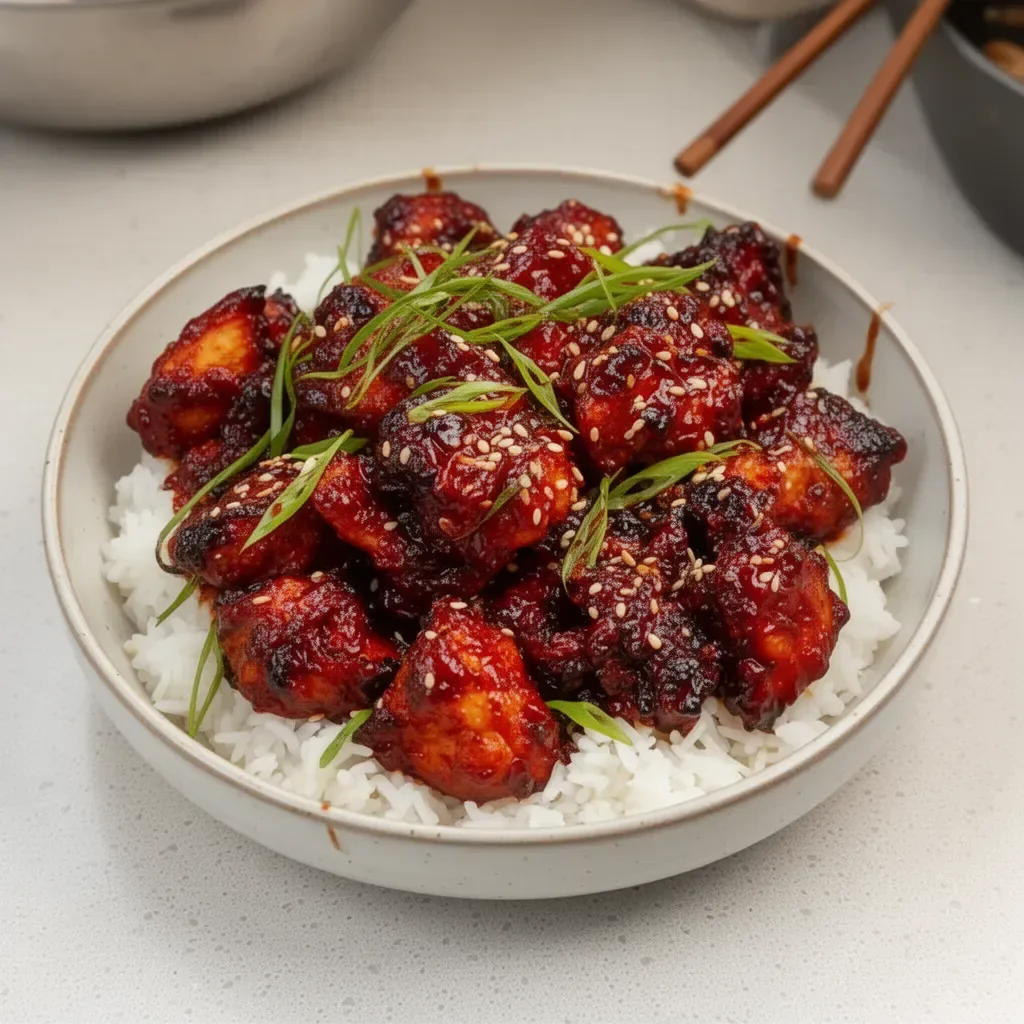
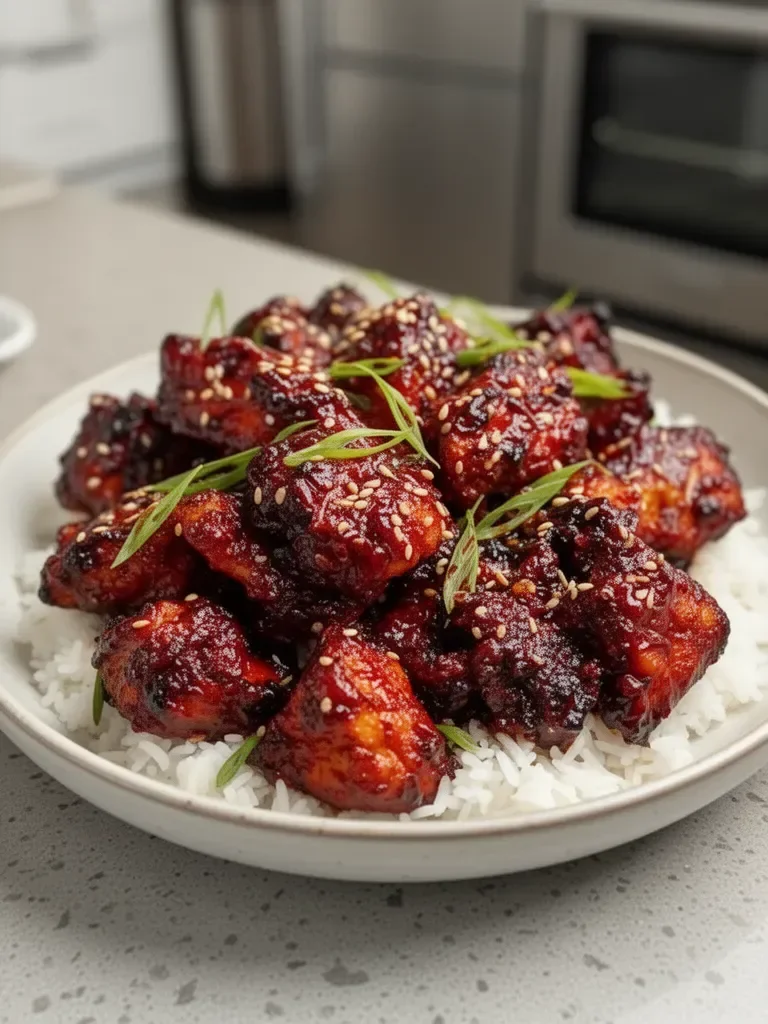
Present sticky Korean gochujang chicken in an eye-catching manner. Serve it over fluffy white steamed rice to absorb the rich sauce. For added vibrancy, sprinkle toasted sesame seeds and sliced green scallions on top.
Consider using a large platter for family-style dining, allowing everyone to help themselves. Alternatively, serve in individual bowls for a more curated presentation.
The bright colors of the chicken, rice, and garnishes create an inviting visual appeal.
Pairings/storage
Pair sticky Korean gochujang chicken with fresh vegetables or a simple side salad to balance the meal. Quick-pickled cucumbers provide a refreshing contrast to the rich flavors.
For storage, keep any leftovers in an airtight container in the refrigerator for up to four days. Reheat gently on the stovetop or in the microwave, adding a splash of water to maintain moisture.
Freezing is also an option, allowing you to enjoy this delightful dish at a later time. Just remember to defrost and heat thoroughly before serving.
Sticky Korean gochujang chicken brings warmth and flavor to the table. Enjoy this recipe that showcases the joy of cooking and sharing delicious meals with loved ones.
Print
Sticky Korean Gochujang Chicken
- Prep Time: 15 minutes
- Cook Time: 15 minutes
- Total Time: 30 minutes
- Yield: 4 servings
- Category: Main Course
- Method: Stovetop
- Cuisine: Korean
- Diet: N/A
Description
A flavorful dish featuring marinated chicken thighs coated in a sticky gochujang sauce, perfect for family dinners.
Ingredients
- 1.5 lbs boneless skinless chicken thighs, cut into 1-inch bite-sized pieces
- 3 tbsp cornstarch
- 1 tbsp neutral oil (canola or avocado)
- 1/2 tsp kosher salt
- 1/4 tsp black pepper
- 3 tbsp gochujang (Korean chili paste)
- 2 tbsp soy sauce
- 2 tbsp honey or brown sugar
- 1 tbsp rice vinegar
- 3 cloves garlic, minced
- 1 tsp fresh ginger, grated
- 1 tbsp toasted sesame oil
- 1/4 cup water
- 2 cups fluffy white steamed rice, for serving
- 1 tbsp toasted white sesame seeds, for garnish
- 2 stalks green scallions, freshly sliced
Instructions
- Combine the chicken pieces with the cornstarch, kosher salt, and black pepper in a mixing bowl. Toss until evenly coated.
- Heat the neutral oil in a large skillet over medium-high heat. Once hot, add the chicken pieces in a single layer.
- Cook the chicken for about 5-7 minutes, turning occasionally until golden brown and cooked through. Remove from the skillet and set aside.
- Pour the gochujang sauce mixture into the same skillet and bring to a gentle simmer for 2-3 minutes.
- Return the cooked chicken to the skillet, tossing it in the sauce until completely coated.
- Continue cooking for another 2-3 minutes, allowing the sauce to cling to each piece of chicken.
- Serve the sticky Korean gochujang chicken over steamed rice and garnish with toasted sesame seeds and sliced green scallions.
Notes
Adjust spiciness with gochujang; add seasonal vegetables for a balanced meal; can use tamari for gluten-free option.
